
thought leadership
Embedding a whole person health approach in Japan’s blood cancer market
Hideaki Sato, Chief Scientific Officer, Avalere Health Japan | June 12, 2026
Japan presents a distinctive landscape for biopharma companies developing blood cancer therapies. An ageing patient population, a highly structured insurance and reimbursement system, and rapid advances in precision medicine combine to create both significant opportunities and real challenges.
We sat down with Avalere Health’s Hideaki Sato, a specialist in medical strategy in Japan, to understand what companies need to know before launching hemato-oncology products in the region.
Blood cancer treatment has advanced significantly in Japan over the past decade. How has that changed the patient journey?
The transformation has been remarkable. In the past, when a patient developed refractory blood cancer, it was often fatal, but advances in treatment are gradually changing that reality. We now have a much broader armamentarium – molecularly targeted therapies, antibody therapies, bispecific antibodies, and CAR-Ts – which means more lines of treatment are available. As a result, blood cancer is increasingly becoming a condition that patients live with over the long term.That shift is positive, but it also changes the support patients and their families need. Previously, the central question was simply: can I get treatment? Now, patients and families increasingly need to understand and engage with more complex treatment journeys – which treatment to use, in what order, what to hold in reserve. That is a significant psychological and cognitive burden, and patient education has become critically important. Healthcare professionals also need a tremendous amount of support keeping up with the pace of innovation to identify the right treatment for their patients and navigate the complexities of treatment sequencing.
For biopharma companies launching in Japan, what does that shift toward long-term disease management mean for their commercial strategy?
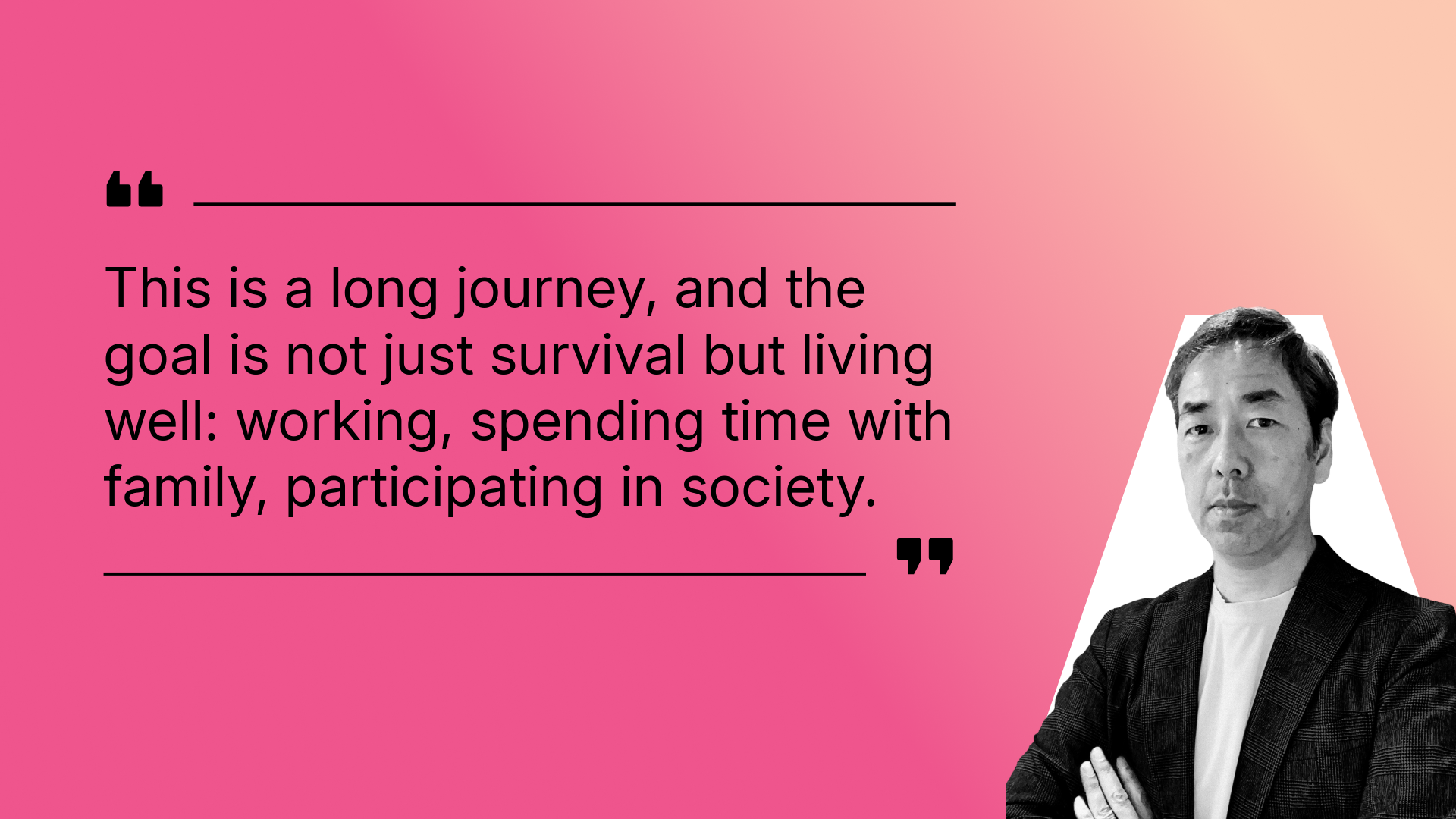
It means communication cannot stop at approval or launch. Companies need to help every patient understand that, even if the first treatment fails, there are options. The message that needs to reach patients, and the healthcare professionals who treat them, is that this is a long journey, and the goal is not just survival but living well: working, spending time with family, participating in society.
Recently, I spoke with a specialist who described how a patient quit their job immediately after diagnosis. The doctor was surprised as that patient could have continued working throughout treatment. That kind of misconception is still common, and biopharma companies are well placed to help correct it, both through healthcare professional-facing materials and direct patient communications.
Japan has a highly structured healthcare system with near-universal annual health check-ups. How does that affect blood cancer diagnosis?
The annual health check-up culture is a genuine advantage. Annual health check-ups are widely adopted among working-age adults in Japan, often at very low cost through their health union. Blood abnormalities can be detected before symptoms appear, which is particularly valuable for blood cancers where early signs like fatigue and anemia are often non-specific.
That said, the diagnostic pathway still presents challenges. Patients are typically referred from a neighborhood clinic or general hospital to a regional key hospital, where a hematologist makes the official diagnosis. For conditions like lymphoma and myeloma, where symptoms are not clearly defined, the time between initial presentation and confirmed diagnosis can still be lengthy – and disease can progress during that window.
What are the precision medicine and biomarker testing challenges that biopharma companies should be aware of when planning a blood cancer launch in Japan?
There are two distinct streams to understand. First, companion diagnostics and molecular testing. Japan was an early adopter here. Biomarker-driven treatment for Chronic Myeloid Leukemia via BCR-ABL testing, or FLT3 for acute myeloid leukemia, helped establish the foundations of precision medicine in the country. As a result, the concept of biomarker-driven care is well-understood among Japanese hematologists.
The second stream is comprehensive genomic profiling, and this is where the tension lies. The Japanese reimbursement system was originally developed around individual biomarker testing. While multiplex testing is increasingly aligned with clinical needs, reimbursement and implementation frameworks have not always kept pace with the growing complexity of precision medicine. Turnaround times for multiplex tests can take one to several weeks depending on the testing platform and institution, and in acute conditions like acute myeloid leukemia, a clinician may need to make a treatment decision within days. The result is that physicians often start treatment without waiting for full genomic data, which can compromise sequencing decisions downstream.
For biopharma companies, this has real implications for launch strategy. If your drug is indicated for a specific biomarker, you cannot assume that the biomarker information is consistently being incorporated into treatment decision-making across all practice settings. This presents a meaningful awareness and behavior change challenge, particularly for newer targets.
The clinical significance of CD20 as a therapeutic target is well established among most hematologists. CD19, by contrast, has long been recognized as a B-cell marker, but only relatively recently became an actionable therapeutic target with the emergence of CAR-T therapies and, more recently, CD19-directed antibody-based treatments. While physicians at CAR-T and high-volume centers are highly familiar with its therapeutic implications, broader integration into routine treatment decision-making across the hematology community is still evolving.
This highlights an important challenge in precision medicine: the availability of an innovative therapy does not automatically translate into patient access. Until new biomarkers and therapeutic targets become fully integrated into routine clinical practice, some eligible patients may not be identified in time to benefit from the latest treatment options.
Driving global access to comprehensive genomic profiling
Avalere Health launches the first ever global guide to overcome barriers to the implementation of comprehensive genomic profiling, enabling more patients with cancer to benefit from precision medicine.
So companies need to actively drive testing behavior, not just promote the drug itself?
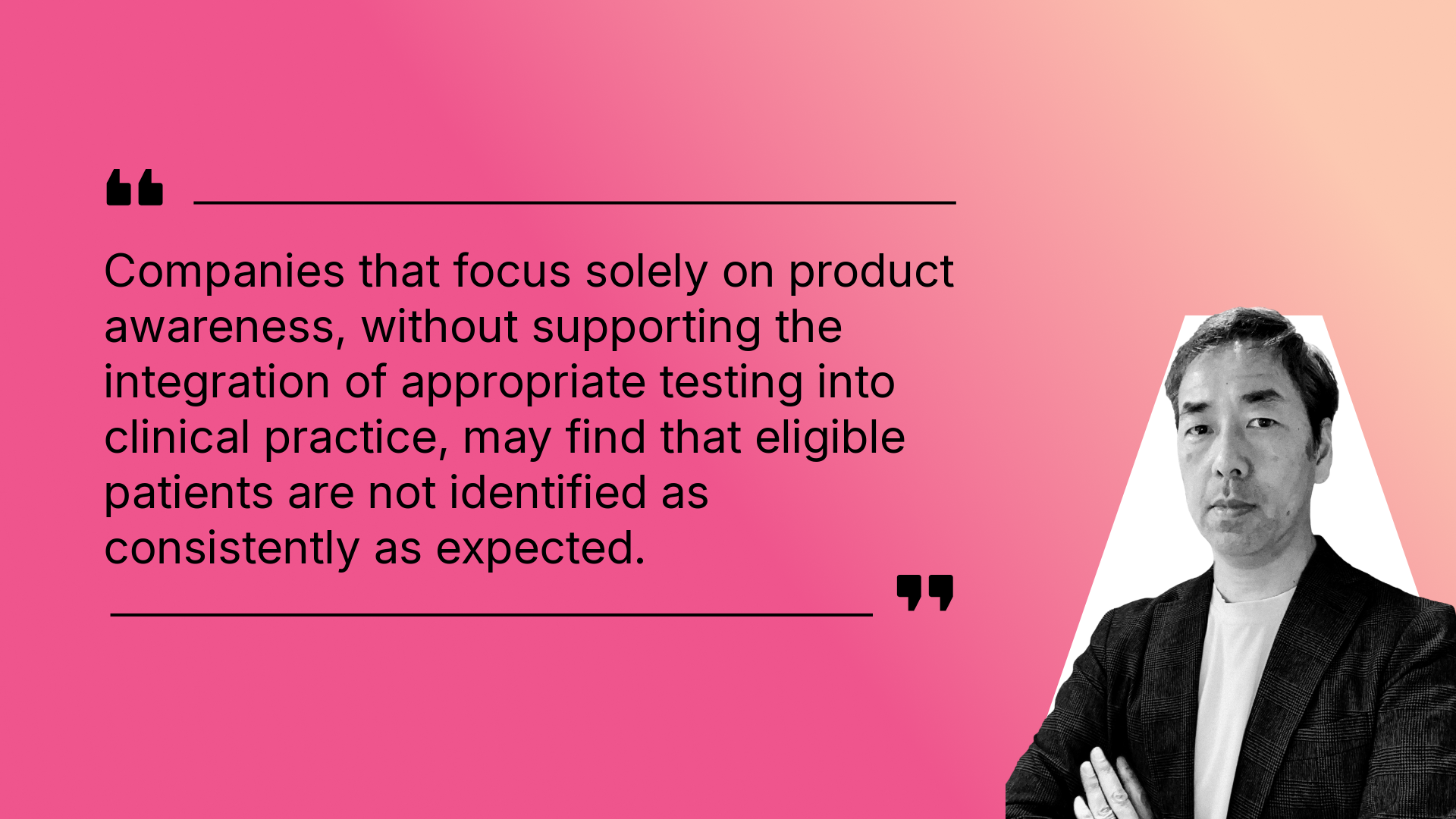
Exactly. The strategy needs to address the sequence: raise awareness of the testing pathway, then communicate the benefit of the drug that flows from that testing. Companies that focus solely on product awareness, without supporting the integration of appropriate testing into clinical practice, may find that eligible patients are not identified as consistently as expected.
There is also a policy dimension. As precision medicine becomes increasingly complex, ensuring broad and timely access to multiplex testing requires continued evolution of both reimbursement frameworks and clinical implementation pathways. Pharmaceutical companies can contribute by generating evidence, supporting education, and working with healthcare stakeholders to better understand how genomic information can be integrated into routine care.
Access to advanced therapies like CAR-T is geographically uneven in Japan. How significant is that barrier?
For general testing and standard treatments, geographic access is reasonably equitable across Japan. The insurance system provides broad coverage. But for CAR-T specifically, the number of authorized treatment centers – around 80 as of now – is still limited and concentrated in urban areas. A patient in a rural prefecture may face a significant journey to reach an eligible facility.
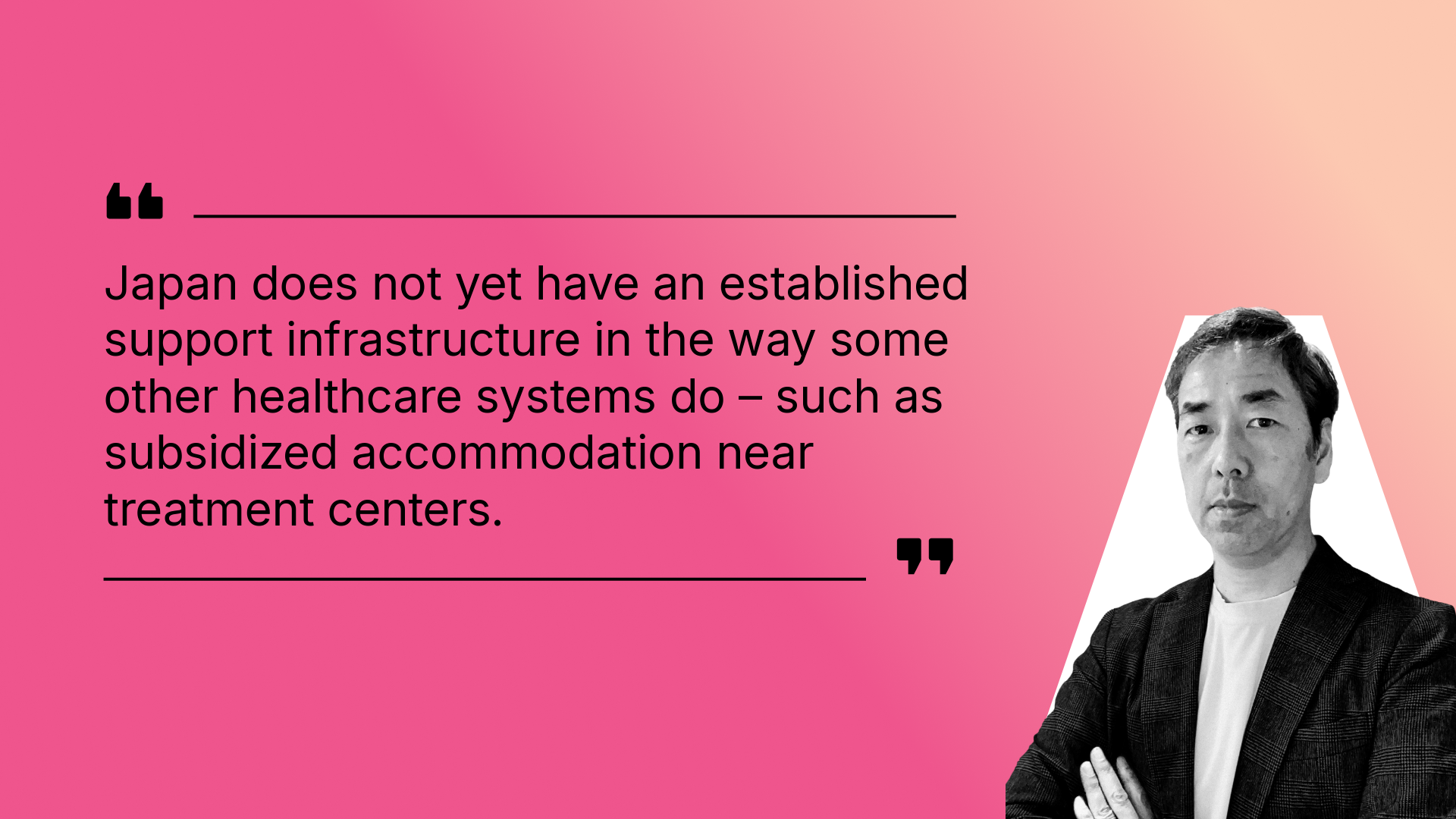
The burden is not just about getting to the center for a test. Treatment itself may require hospitalization near an urban facility, sometimes for extended periods. That creates a financial and logistical strain not only for the patient but for their family. Japan does not yet have an established support infrastructure in the way some other healthcare systems do – such as subsidized accommodation near treatment centers, for example. This is a genuine gap, and it is one that could be addressed through innovative partnerships, perhaps with hotel networks or patient support programs. It is an area where all stakeholders relevant to healthcare communication could play a constructive role.
You mentioned psychological support as another gap. Is this recognized within the oncology community in Japan?
It is recognized, but the infrastructure to provide support at scale is not yet in place. As treatment lines multiply, the psychological toll on patients becomes more complex. Each relapse brings its own emotional impact. Patients and families need support in processing not just the medical situation but the longer-term life implications.
Not every hospital has a psycho-oncologist, and not every hematologist has the tools or training to provide psychological support alongside clinical care. Nurses also need to be trained to recognize and respond to these mental health needs.
The concept of psychological care in blood cancer is not new, but its integration into routine clinical practice is still incomplete. For biopharma companies thinking about holistic patient support, this is a meaningful area, though making the business case requires evidence linking psychological care to clinical outcomes.
What is your overarching advice to a biopharma company entering the Japanese blood cancer market?
Delivering innovative therapies to the right patients is important, but I believe the even greater challenge is ensuring that the healthcare ecosystem functions efficiently enough to support that goal. Japan is moving towards a more patient-centric navigation model, where the question is not simply whether a treatment exists, but whether the right patient receives it at the right time, with the right support around them. That requires communication strategies that address healthcare professionals, patients, and the broader system simultaneously.
Information is what makes a drug a drug. Phase III data, efficacy profiles, safety data, risk management – these are what allow a molecule to function therapeutically in the real world. Our job, and the job of biopharma companies, is to ensure that information reaches the right people, in the right form, to drive meaningful action. In Japan, that means understanding the nuances of healthcare professional behavior, the reimbursement environment, the testing pathway, and the patient support landscape. Companies that invest in that understanding will be better positioned to achieve the goal that matters most: reaching every patient who could benefit.
Ready to bring every patient possible within reach?
Closing the gap between innovation and access demands a deep understanding of science, systems, and society – the barriers, opportunities, and where these forces collide. Get in touch with Avalere Health’s hemato-oncology experts. Reveal the tensions holding your therapies back, and the opportunities your competitors haven’t found yet.