
thought leadership
The impact of EU policy and advocacy on progress with treatments for rare disease
Mariam Bibi, Senior Director, Global RWE; Catherine Kielar, Executive Director and Practice Lead, Global Market Access | February 20, 2024
Up to 36 million people across Europe and more than 400 million globally1,2 are living with a rare disease.
It is widely understood that patients and their families face a number of challenges in accessing diagnosis and appropriate, timely treatment. Healthcare professionals are also faced with challenges with the availability of care for their patients, appropriate treatment, and access to suitable guidelines. Finally, investigators and researchers face challenges with research and development (R&D) in the rare disease space due to the small patient pool and limited funding for research.
Policy and advocacy play a key role in overcoming challenges within the field of rare disease
EU policy and advocacy play a key role in overcoming these challenges; over the past two decades, policy changes and the introduction of awareness campaigns have increased the availability of treatment for patients with a rare disease.
For example, in 2000, the implementation of the Orphan Medicinal Products Regulation, which provides incentives for pharmaceutical companies to invest in rare disease treatments, led to the approval of more than 170 orphan drugs in the EU.3,4 Since 2000, a number of policies and initiatives have helped increase awareness and stimulate investment to encourage the development of innovative treatments in the rare disease space. Figure 1 highlights the key policies, awareness initiatives, and funding programs implemented to help elevate the standard of care for rare diseases.
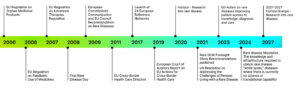
Figure 1: Policies, awareness initiatives, and funding programs across the EU since 2000
Funding for research is an essential driver of innovation in the treatment of rare diseases
The availability of funding has been facilitated in part by the EU’s research and innovation framework programs, such as Horizon 2020 and Horizon 2021-2027, which emphasize developing treatment and diagnostics via innovative collaborative research.5
The European Reference Networks (ERNs)—virtual networks of healthcare providers across Europe—have also played a key role in elevating the rare disease agenda. The first 24 ERNs were launched in 2017, with more than 900 specialized healthcare units from over 300 hospitals across 26 member states. The ERNs work via virtual advisory boards, collaborating to review patient cases, diagnosis, and treatment and to share knowledge and experience with colleagues and patient groups. They also work on research projects, setting up disease registries and developing clinical guidelines. As of 2022, the number of ERN members has grown to 1,500.
In 2023 the EU published its action plan for rare diseases, which aims to improve the diagnosis, care, and treatment of patients with rare diseases through the pooling of resources and colaboration.1
EU policy and advocacy play a key role in overcoming challenges.; Over the past two decades, policy changes, advocacy, and the introduction of awareness campaigns have increased the availability of treatment for patients with a rare disease.
Mariam Bibi
Senior Director, Global RWE

The Rare Disease Moonshot program is another example of the coordination of policymakers, advocacy groups, and public and private partnerships in shaping the environment to promote advances in rare diseases.
The program was established to foster collaboration between public and private organizations to support research in disease areas where there are no treatment options and where no R&D is currently taking place.
The program has identified three key areas where public-private collaboration was thought to add most value:
- Optimizing the translational research ecosystem to accelerate translation
- Modernizing clinical trials (design, conduct, and regulatory sciences) to make them more suitable for very small populations
- Supporting infrastructure to shorten the path to diagnosis and treatment
The Rare Disease Moonshot program is uniquely positioned to leverage public-private collaborations to help amplify the patient voice. The program aims to achieve this by building partnerships with patient groups and helping build communities to collect vital data. However, in order for this collaboration to be successful, stakeholders from patient groups, healthcare professionals, academics, drug and technology manufacturers, and regulators must work in collaboration to ensure that the correct data are collected and the program is truly multidisciplinary.6
Patients and patient groups have also played a vital role in raising the profile of rare diseases
The first Rare Disease Day was marked in 2008, with patients, charities, and public and private organizations celebrating innovation or highlighting gaps in research and access to care. As a key stakeholder, patients add a unique perspective to research and market access endeavors. Between 2006 and 2016, the number of clinical trials focused on rare disease increased by 88%.7
Despite the increase in awareness, drug development, and regulatory improvement, the rare disease market continues to face issues such as patient access and affordability. Navigating policies and engaging various stakeholders can be difficult. In recent years, with the introduction of gene therapies, which are potentially curative for rare diseases but come with a premium price, companies are faced with complex market access challenges.
Exploring the rare disease biotechnology landscape: a free report
This update is an excerpt from the free report, “Rare Disease Biotechnology Landscape.” Published by policy and access experts from Avalere and Avalere Health, the report examines the economic burden associated with these conditions, US and ex-US policy considerations, novel approaches to shortening the diagnostic odyssey, and clinical trial design. The report is available to download at avalere.com.
Partnering with you to make science accessible to every patient
Avalere Health has a dedicated team of experts who have extensive market access experience with rare disease and orphan medicines. Please contact us for a confidential conversation about your strategic policy, access, value, and evidence needs.
References
- EU ACTION ON RARE DISEASES. Improving patient access to knowledge, diagnosis and care. 2023 https://health.ec.europa.eu/system/files/2023-02/ncd_2022_rare-disease_factsheet_en.pdf [Accessed February 5, 2024].
- Marwaha S, Knowles JW, Ashley EA. A guide for the diagnosis of rare and undiagnosed disease: beyond the exome. Genome Med. 2022 Feb 28;14(1):23. doi: 10.1186/s13073-022-01026-w. PMID: 35220969; PMCID: PMC8883622.
- Assessment of the Impact of Orphan Medicinal Products on the European Economy and Society. Office of Health Economics. 2010. https://www.ohe.org/publications/assessment-impact-orphan-medicinal-products-european-economy-and-society [Accessed February 5, 2024].
- EURORDIS’ key advocacy priorities at the EU level. https://www.eurordis.org/rare-disease-policy/european-policy/ [Accessed February 5, 2024].
- Rare disease. What is the EU doing? https://health.ec.europa.eu/european-reference-networks/rare-diseases_en#:~:text=The%20EU’s%20strategic%20objective%20for,to%20share%20expertise%20and%20information [Accessed February 5, 2024].
- Rare Disease Moonshot – Scaling-up public-private partnerships to accelerate research into world’s rarest diseases.https://www.efpia.eu/news-events/the-efpia-view/statements-press-releases/rare-disease-moonshot-scaling-up-public-private-partnerships-to-accelerate-research-into-world-s-rarest-diseases [Accessed February 6, 2024].
- Evaluating the Orphan Regulation and its impact on patients and rare disease R&D in the European Union. http://www.pugatch-consilium.com/reports/Benchmarking_success.pdf [Accessed February 7, 2024].